
Cold Knife Conization Procedure in Dehradun
Cold Knife Conization Procedure in Dehradun
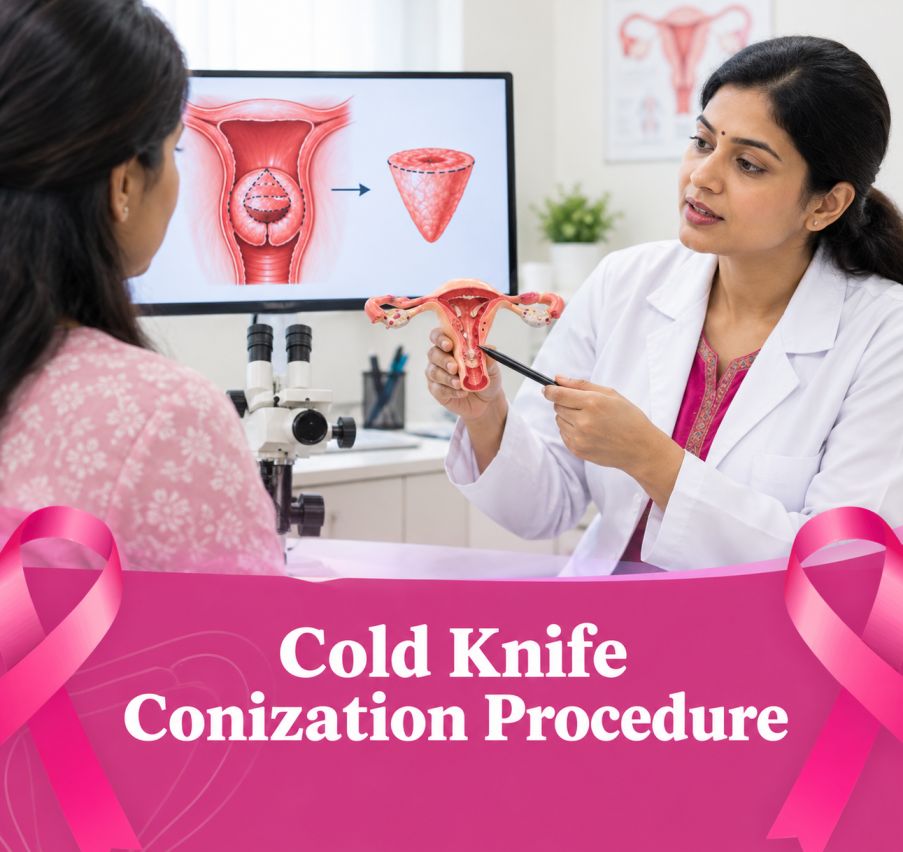
Cold knife conization is a surgical procedure used to remove a cone-shaped piece of tissue from the cervix for diagnostic or treatment purposes. This procedure is commonly recommended when abnormal cervical cells or precancerous lesions are detected during screening tests such as a Pap smear or colposcopy.
The removed tissue is carefully examined in a laboratory to determine whether abnormal or cancerous cells are present. Cold knife conization helps doctors make an accurate diagnosis and may also remove abnormal cells before they develop into cervical cancer.
How the Cold Knife Conization Procedure Is Performed
Cold knife conization is a surgical procedure used to remove a cone-shaped section of tissue from the cervix for detailed laboratory examination. It is generally performed in a hospital under general or regional anaesthesia.
Preoperative Assessment:
The doctor reviews cervical screening results, biopsy reports, medical history, and other relevant investigations to plan the procedure.
Administration of Anaesthesia:
Appropriate anaesthesia is administered to help ensure the patient remains comfortable during surgery.
Visualisation of the Cervix:
A speculum is inserted into the vagina to allow the surgeon to examine the cervix. A solution may be applied to help identify abnormal areas.
Removal of Cervical Tissue:
Using a surgical scalpel, the surgeon carefully removes a cone-shaped section of cervical tissue containing the area of concern.
Bleeding Control:
The surgeon takes appropriate measures to control bleeding and support healing of the treated area.
Laboratory Examination:
The removed tissue is sent for histopathological examination to assess abnormal cells, the extent of the lesion, and tissue margins.
Benefits of Cold Knife Conization Procedure
Cold knife conization is a surgical procedure used to remove a cone-shaped section of tissue from the cervix for detailed laboratory examination.
Recovery After Cold Knife Conization Procedure
Recovery after a cold knife conization procedure usually takes around 4–6 weeks, depending on the amount of cervical tissue removed and individual healing.
Doctors usually recommend avoiding tampons, sexual intercourse, or heavy exercise for a short period to allow proper healing and reduce the risk of infection.
Cold Knife Conization– Frequently Asked Questions
It removes a cone-shaped section of cervical tissue for detailed examination and may also treat selected precancerous cervical abnormalities.
It is a surgical procedure usually performed in a hospital under general or regional anaesthesia. The level of care and recovery required depends on the individual case.
No. The procedure may be performed to investigate abnormal or precancerous cells. The laboratory findings help determine the diagnosis and whether additional treatment is needed.
Yes. Follow-up is important to discuss the histopathology report, assess recovery, and determine the appropriate cervical screening or treatment plan.