
Coordination with IVF Specialists
Coordination with IVF Specialists
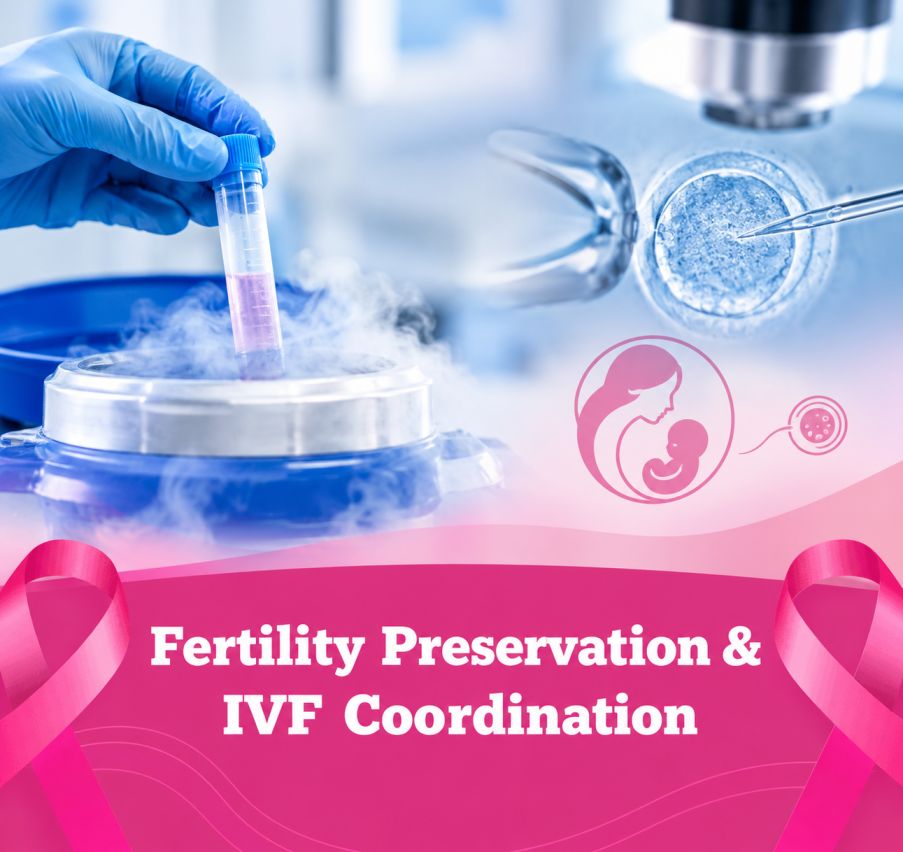
Coordination with IVF specialists is an important part of fertility preservation for women undergoing cancer treatment. Certain cancer treatments such as chemotherapy, radiation therapy, or major gynecologic surgeries may affect a woman’s fertility.
By working closely with experienced IVF and reproductive medicine specialists, gynecologic oncologists can help patients explore options to preserve their fertility before cancer treatment begins.
When May You Need Coordination with an IVF Specialist?
Before Cancer Treatment
Certain cancer treatments, including chemotherapy and radiotherapy involving reproductive organs, may affect ovarian function and fertility. Early consultation with a fertility specialist can help patients understand possible fertility preservation options before treatment begins, where medically appropriate.
When Planning Fertility Preservation
Women who wish to explore options for preserving their reproductive potential may benefit from discussing their circumstances with a fertility specialist. The available options depend on age, diagnosis, treatment timeline, and individual medical factors.
Before Gynaecological Surgery
Some gynaecological conditions require surgical treatment that may have implications for future fertility. When relevant, discussing reproductive goals with the treating gynaecologist and an IVF specialist can help inform treatment planning.
Cervical Cancer
Minimally invasive surgical techniques may be used for selected cervical cancer cases.
Pelvic Masses & Tumors
Evaluation and removal of abnormal pelvic growths and tumors.
Endometriosis
Laparoscopy helps diagnose and treat endometriosis by removing abnormal tissue.
Uterine Fibroids
Fibroids can be removed using minimally invasive laparoscopic techniques.
Benefits of a Collaborative Approach to Fertility Care
How Does the Coordination Process Work?

Frequently Asked Questions
If your planned treatment may affect ovarian function or future fertility, discuss fertility preservation as early as possible, ideally before starting treatment. The timing and available options depend on your medical condition and treatment urgency.
No. Fertility preservation and IVF cannot guarantee pregnancy or a live birth. Outcomes depend on several medical and individual factors, which should be discussed with the treating specialists.
You can consult Dr. Yamini Kansal in Dehradun to discuss your gynaecological condition and whether consultation with an IVF or reproductive medicine specialist may be appropriate.
No. It depends on the diagnosis, the planned procedure, its possible impact on reproductive function, and the patient's future pregnancy goals.