
Hormonal Therapy for Early-Stage Endometrial Cancer
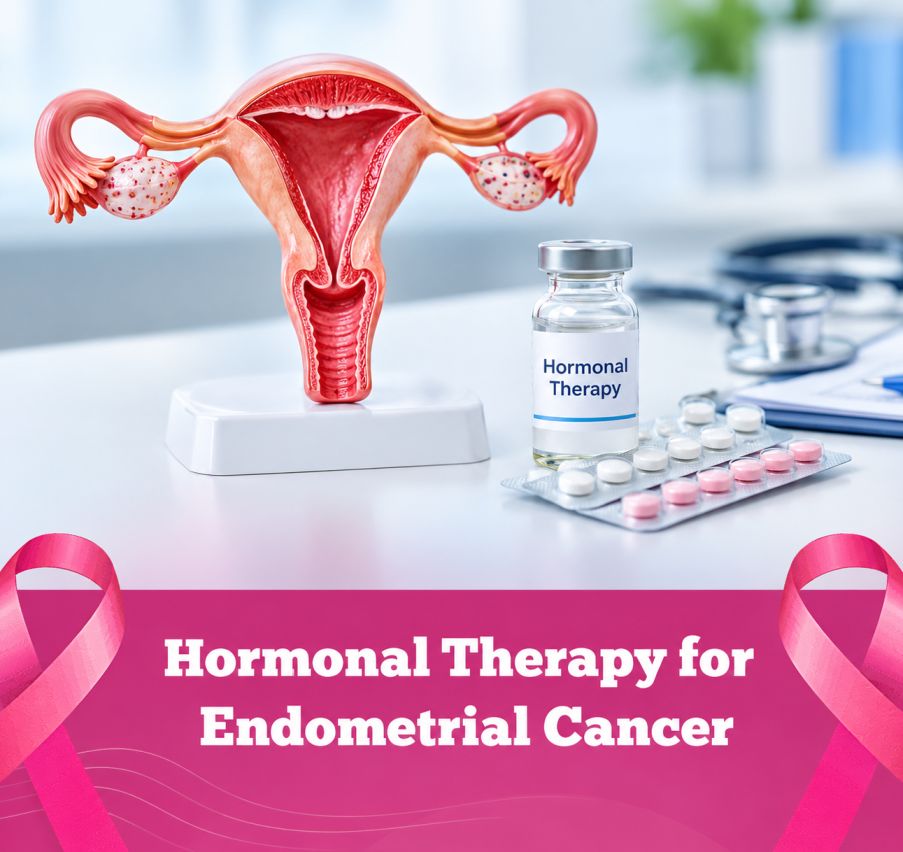
Hormonal Therapy for Early-Stage Endometrial Cancer
Hormonal therapy is a treatment option used for selected patients with early-stage endometrial cancer, particularly women who wish to preserve fertility. Instead of immediate surgery, hormonal therapy uses medications that influence hormone levels to slow down or stop the growth of cancer cells.
Endometrial cancer is often influenced by the hormone estrogen, and hormonal therapy works by using medications such as progesterone to counteract estrogen’s effects and control cancer growth.
Types of Hormonal Therapy for Endometrial Cancer
The choice of hormonal treatment depends on the patient's diagnosis, clinical findings and treatment goals.
Oral Progestin Therapy
Progestin medicines may be prescribed orally to counteract the effects of oestrogen on the endometrium. These medications can help control the growth of selected hormone-sensitive endometrial cancers.
Levonorgestrel-Releasing Intrauterine Device
A levonorgestrel-releasing intrauterine device (LNG-IUD) is placed inside the uterus and releases progestin locally into the uterine lining.
Who May Be Eligible for Hormonal Therapy?
Hormonal therapy for early-stage endometrial cancer is generally considered for a carefully selected group of patients.
Potential Benefits of Hormonal Therapy

Frequently Asked Questions
It may be an option for carefully selected patients, particularly those with Grade 1 endometrioid cancer confined to the endometrium. A specialist must assess the diagnosis, stage and other risk factors before recommending it.
Progestin-based medicines, such as medroxyprogesterone acetate or megestrol acetate, may be prescribed. A levonorgestrel-releasing intrauterine device may also be considered. The choice depends on the patient's clinical assessment.
Treatment commonly involves several months of therapy, with response assessments during the treatment period. The duration depends on the patient's response and clinical recommendations.
No. It is suitable only for carefully selected patients. Tumour grade, cancer subtype, extent of disease, imaging findings and the patient's ability to attend regular follow-up all influence eligibility.
Dr. Yamini Kansal is a Gynaecological Oncologist in Dehradun who evaluates and manages women with gynaecological cancers. Patients can consult her to discuss their diagnosis and whether a fertility-sparing treatment approach may be appropriate.