
Fertility-Sparing Surgery for Ovarian Cancer
Fertility-Sparing Surgery for Ovarian Cancer
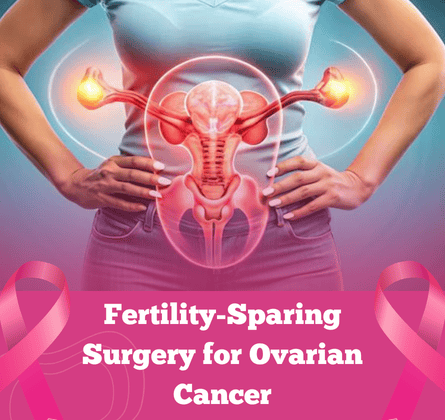
Fertility-sparing surgery is a specialized surgical approach used to treat ovarian cancer while preserving a woman’s ability to have children in the future. In this procedure, the affected ovary and surrounding tissues containing cancer are removed while preserving the healthy ovary and the uterus.
This treatment option is usually considered for young women diagnosed with early-stage ovarian cancer who wish to maintain fertility. Fertility-sparing surgery allows effective cancer treatment while protecting reproductive potential whenever medically appropriate.
Who is a Candidate for Fertility-Sparing Surgery?
Fertility-sparing surgery is a specialized treatment approach that allows women with certain gynecologic cancers to preserve their ability to have children while effectively treating the disease.
Early-Stage Ovarian Cancer
Patients diagnosed with early-stage ovarian cancer may be eligible for fertility-preserving surgical treatment.
Desire to Preserve Fertility
Women who wish to maintain their ability to conceive in the future may consider fertility-sparing surgery.
Cancer Limited to One Ovary
This procedure may be suitable when cancer is confined to a single ovary and has not spread.
No Spread to Other Organs
Patients without evidence of cancer spread to other organs may be good candidates for conservative surgery.
Medically Suitable for Surgery
The patient should be medically fit and evaluated by a specialist to ensure safe surgical treatment.
Benefits of Fertility-Sparing Surgery
Fertility-sparing surgery is designed to treat certain gynecologic cancers while preserving a woman's ability to have children in the future. This approach carefully removes cancerous tissue while protecting healthy reproductive organs whenever possible.
Fertility-preserving treatment can significantly improve the quality of life for young cancer patients by allowing them to maintain reproductive choices after treatment.
How Laparoscopic Surgery is Performed
Laparoscopic surgery is a minimally invasive procedure performed using a small camera and specialized instruments through tiny incisions.
Small Incisions
Small incisions are made in the abdomen to allow access for the laparoscope and surgical instruments.
Laparoscope Insertion
A laparoscope (small camera) is inserted through one incision to provide a clear view of internal organs.
Surgical Instruments
Specialized surgical instruments are inserted through other small incisions to perform the procedure.
Monitor Guidance
The surgeon performs the surgery while viewing the organs on a high-resolution monitor.
Closure of Incisions
After the procedure, the instruments are removed and the small incisions are carefully closed.
Recovery After Laparoscopic Surgery
Recovery from laparoscopic surgery is generally faster compared to traditional open surgery due to smaller incisions and minimally invasive techniques.
Doctors provide post-operative care instructions to ensure smooth healing and a safe recovery.
Why Choose Laparoscopic Surgery?
Choosing laparoscopic surgery provides several advantages compared to traditional open surgical procedures.
Minimally invasive laparoscopic techniques help patients recover faster and return to normal life sooner.

Laparoscopic Surgery – Frequently Asked Questions
Find answers to common questions about laparoscopic surgery, a minimally invasive technique used for diagnosing and treating gynecologic conditions and cancers in Dehradun.
Laparoscopic surgery is a minimally invasive surgical technique that uses small incisions and a thin camera called a laparoscope to perform procedures inside the abdomen or pelvis. It allows surgeons to treat various gynecologic conditions with greater precision and less trauma compared to traditional open surgery.
Laparoscopic surgery can be used to treat various gynecologic conditions including ovarian cysts, endometriosis, uterine fibroids, pelvic masses, and certain gynecologic cancers such as ovarian and endometrial cancer.
Laparoscopic surgery offers several benefits such as smaller incisions, less postoperative pain, minimal scarring, reduced blood loss, shorter hospital stay, and faster recovery compared to traditional open surgery.
Recovery after laparoscopic surgery is usually faster than open surgery. Many patients can return to normal activities within a few days to a couple of weeks, depending on the type of procedure performed.
Dr. Yamini Kansal is an AIIMS-trained Gynaecological Oncologist specializing in advanced laparoscopic gynecologic cancer surgery. She provides minimally invasive surgical treatments and personalized care for women in Dehradun.