
Cytoreductive Surgery in Dehradun
Cytoreductive Surgery for Ovarian Cancer in Dehradun
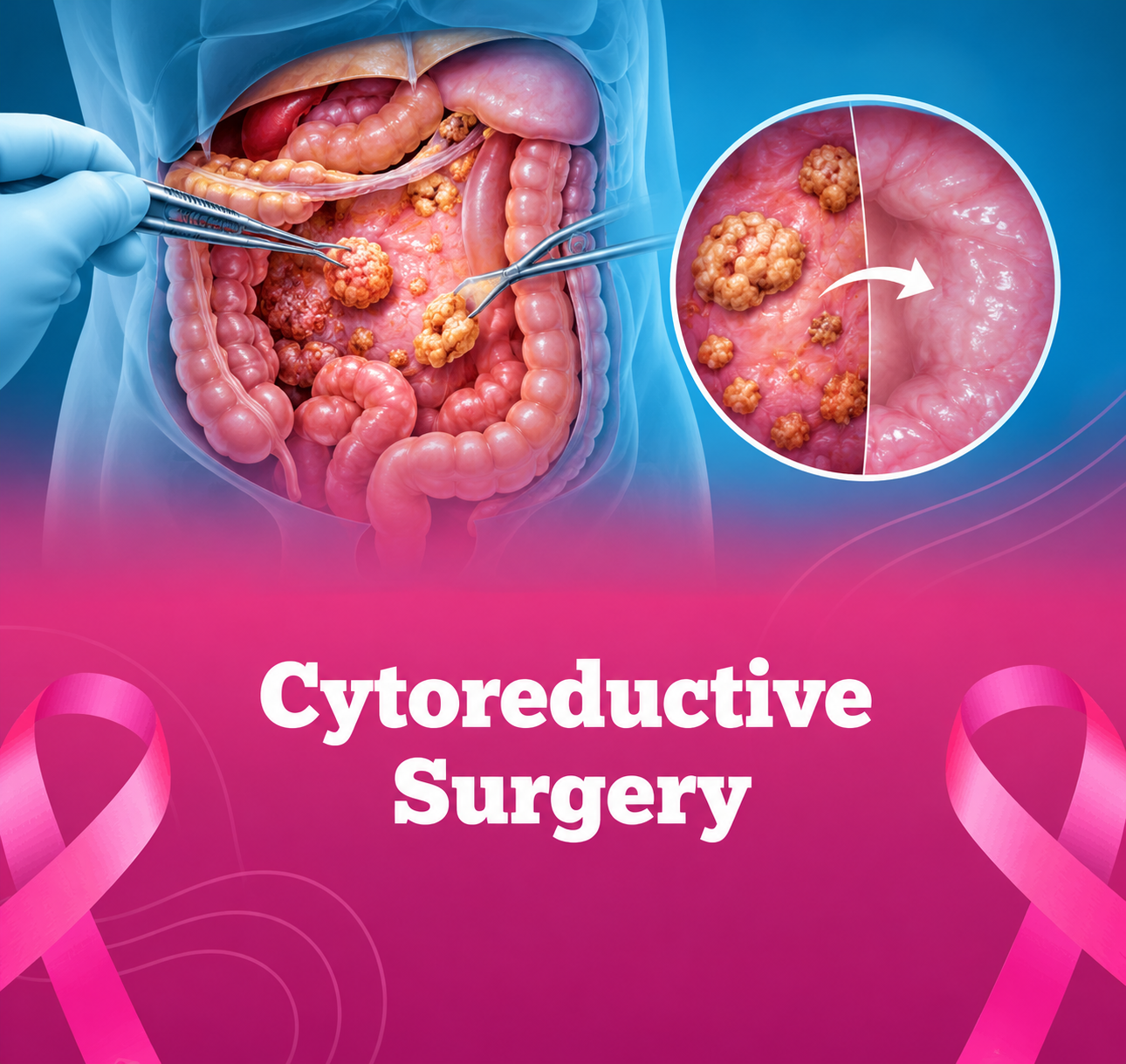
Cytoreductive surgery, also known as debulking surgery, is a specialized surgical procedure used to remove as much visible cancer as possible from the abdomen and pelvis. It is commonly performed in the treatment of advanced ovarian cancer and certain other gynecologic cancers.
The goal of cytoreductive surgery is to reduce the amount of cancer in the body so that additional treatments such as chemotherapy can be more effective. Removing the majority of the tumor improves treatment outcomes and increases the chances of successful cancer control.
When Is Cytoreductive Surgery Recommended?
Advanced Ovarian Cancer
When cancer has spread beyond the ovaries and involves tissues or organs within the abdomen.
Fallopian Tube Cancer
When tumour deposits affect the fallopian tubes and surrounding abdominal or pelvic structures.
Primary Peritoneal Cancer
When cancer involves the lining of the abdominal cavity.
Selected Recurrent Cancers
When ovarian or related cancer returns and further surgery may be appropriate.
After Initial Chemotherapy
In some patients, surgery may be planned after chemotherapy to reduce tumour size and improve the possibility of removing visible disease.
How Is Cytoreductive Surgery Performed?

Frequently Asked Questions About Cytoreductive Surgery
The main purpose is to remove as much visible cancer as safely possible from the abdominal and pelvic regions. It is commonly considered for selected patients with advanced ovarian and related cancers.
Yes. Cytoreductive surgery is commonly referred to as debulking surgery. Both terms describe an operation intended to reduce the amount of visible tumour.
No. Suitability depends on the stage and spread of cancer, the patient's general health and whether the tumour can be safely removed.
Recovery time varies according to the complexity of the operation, the organs involved and the patient's overall health. The treating team provides an individual recovery plan.
Patients can consult a qualified gynaecological oncologist for an individual assessment and discussion of suitable surgical and other treatment options.