
Robotic Surgery
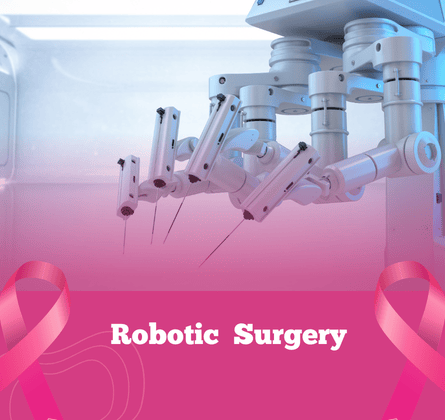
Robotic Gynecologic Cancer Surgery
Robotic surgery is an advanced form of minimally invasive surgery that uses robotic technology to assist surgeons in performing complex procedures with greater precision and control. In this technique, the surgeon operates robotic instruments through small incisions while viewing the surgical area using a high-definition 3D camera.
In gynecologic oncology, robotic surgery is commonly used to treat conditions such as endometrial cancer, cervical cancer, ovarian tumors, and other pelvic diseases.
Conditions Treated with Robotic Surgery
Robotic-assisted surgery is an advanced minimally invasive technique that allows surgeons to perform complex gynecologic procedures with greater precision, flexibility, and control.
Endometrial Cancer
Robotic surgery is commonly used for the staging and treatment of endometrial cancer.
Cervical Cancer
Minimally invasive robotic procedures can help treat selected cervical cancer cases.
Ovarian Tumors
Robotic techniques allow precise removal and evaluation of ovarian tumors.
Uterine Fibroids
Robotic-assisted surgery helps remove fibroids while preserving the uterus.
Pelvic Masses
Robotic surgery enables accurate diagnosis and removal of pelvic masses.
Severe Endometriosis
Robotic surgery helps remove complex endometriosis tissue with improved precision.
Benefits of Robotic Surgery
Robotic surgery is an advanced minimally invasive technique that offers several advantages compared to traditional open surgery.
These benefits make robotic surgery an important advancement in modern gynecologic oncology and minimally invasive treatment.
How Robotic Surgery Works
Robotic surgery involves a sophisticated surgical system that includes robotic arms, a high-definition camera, and a surgeon-controlled console for enhanced precision and control.
Small Incisions
Small incisions are made in the abdomen to insert robotic instruments and a tiny surgical camera.
3D Robotic Camera
A high-definition robotic camera provides a magnified 3D view of the surgical area.
Robotic Instruments
Robotic arms with specialized surgical instruments are inserted through small ports.
Surgeon Console Control
The surgeon controls the robotic instruments using a computer-assisted surgical console.
Precise Robotic Movements
The robotic system translates the surgeon’s hand movements into extremely precise surgical actions.
Recovery After Robotic Surgery
Recovery after robotic surgery is generally faster compared to traditional surgery because it uses advanced technology and minimally invasive techniques.
Doctors provide proper post-operative care instructions to ensure safe recovery and optimal surgical outcomes.
Why Choose Robotic Surgery?
Choosing robotic surgery offers several important advantages due to its advanced technology and precision-guided surgical techniques.
Robotic-assisted surgery allows surgeons to perform complex procedures with greater precision, resulting in safer treatment and faster patient recovery.

Robotic Surgery – Frequently Asked Questions
Find answers to common questions about robotic surgery, an advanced minimally invasive technique used for treating gynecologic conditions and cancers in Dehradun.
Robotic surgery is an advanced minimally invasive surgical technique where the surgeon uses a robotic-assisted system to perform complex procedures with greater precision, flexibility, and control.
Robotic surgery can be used to treat various gynecologic conditions including ovarian cysts, uterine fibroids, endometriosis, pelvic masses, and gynecologic cancers such as ovarian, cervical, and endometrial cancer.
Robotic surgery offers several benefits such as greater surgical precision, smaller incisions, minimal blood loss, reduced pain, shorter hospital stay, and faster recovery compared to traditional open surgery.
Recovery after robotic surgery is usually faster than traditional open surgery. Most patients can return to normal daily activities within a short period depending on the type of procedure performed.
Dr. Yamini Kansal is an AIIMS-trained Gynaecological Oncologist specializing in advanced robotic and minimally invasive gynecologic cancer surgery, providing expert care for women in Dehradun.